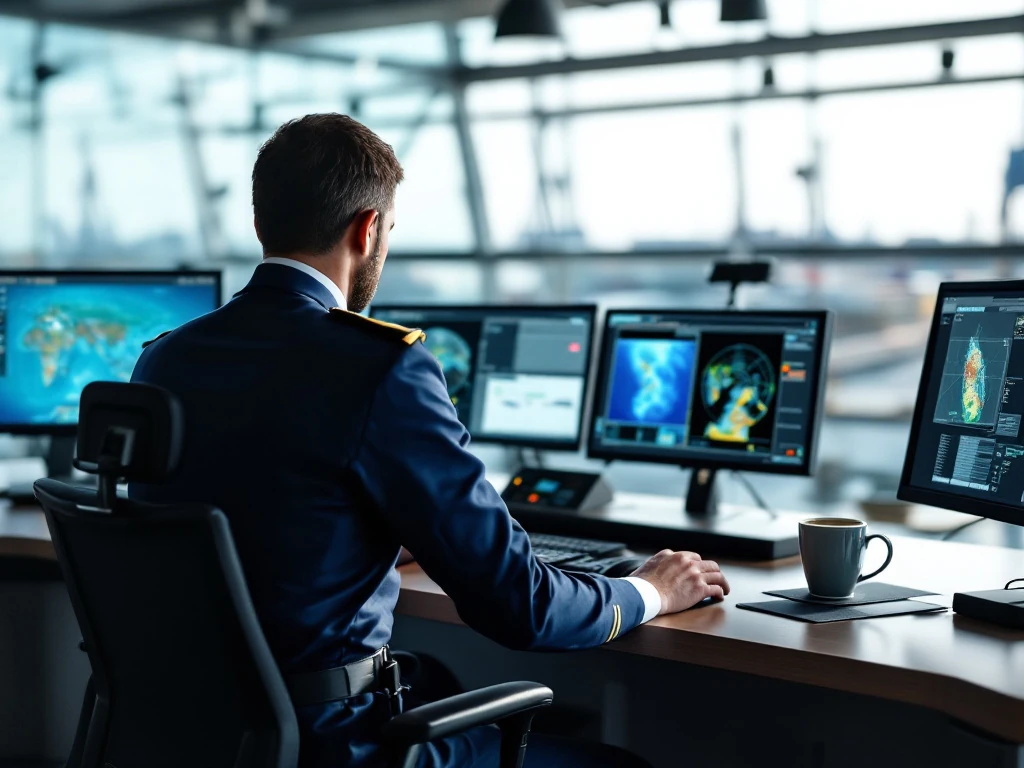
Our consortium has received an MIT-AI grant from the Dutch government. With growing global transportation, vessel traffic control at ports is becoming increasingly complex. In this MORSE follow-up project, the goal is to develop a multimodal and hybrid system that detects high-risk situations based on the mental state of traffic operators. A secure and validated system will be developed that can increase maritime safety in complex port environments.
MARSAI
MARitime Safety through Artificial Intelligence
Background
As global transportation and trade continue to grow, vessel traffic control at ports is becoming increasingly complex. At the port of Rotterdam, around 300 vessels a day pass through, ranging in size from large container ships to smaller vessels. Most vessels have international crews and are assisted in port by harbour masters, pilots, tugboats, and linesmen. The Vessel Traffic Services (VTS) oversees all communication between ships and their crews. VTS operators ensure safe and efficient port operations by managing traffic, providing critical updates, and overseeing advanced systems. However, during peak periods, high cognitive load and fatigue can impair decision-making, reduce situational awareness, and increase the risk of incidents. Human error, such as misjudgment or communication failures, remains a leading cause of accidents. Simulations offer a practical solution, allowing researchers to study the impact of high-pressure situations and prepare for future challenges, like the integration of autonomous vessels. As global trade demands rise, innovative approaches are essential to uphold safety and efficiency in busy ports.
Project Objectives
Noldus, Noterik, and VicarVision have received funding to develop a system that detects high-situations based on the mental state of traffic operators. With multimodal AI analyses of the voice, facial expressions, and physiological signals, signs of mental fatigue and stress will be detected. By combining it with an environment-aware Hybrid-AI model, the system aims to provide a comprehensive and explainable estimation of mental states. MARIN (a large industrial TO2 maritime research institute) will be a launching customer and actively participate in the project by hosting validation studies. In addition, BG.legal (a law firm with expertise in legal aspects of AI) will participate to actively investigate the implications of the new AI-Act with respect to this project.
Expected Results
The end result produced by the project will be a secure validated system that can detect and predict a range of key mental states in traffic operators, which can be used to improve research and training to enhance traffic security. Noterik will deliver an improved version of the StagePlayer. VicarVision will develop improved AI algorithms that can also enhance capabilities of FaceReader. Noldus will develop an improved version of the Noldus Hub including AI technologies created by the other partners. The innovative hybrid and multimodal solution will benefit human factors research.